Molecular Celebrity Gap: Why Adenine Is Everywhere in Life and Nowhere in Public Conversation
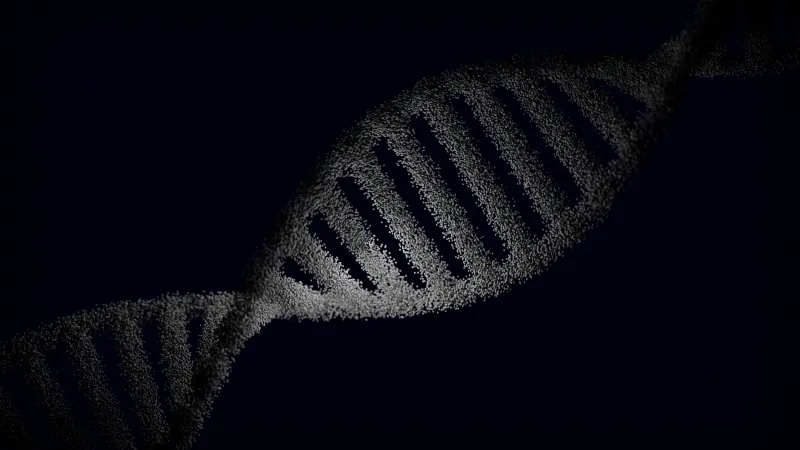
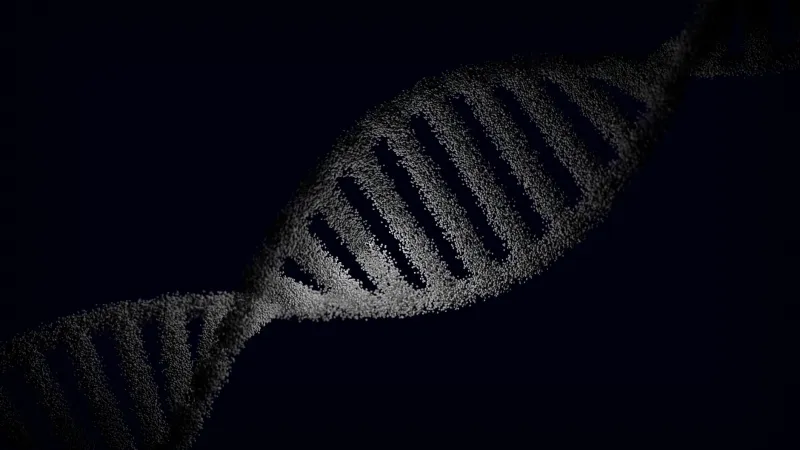
Ask a typical American adult to name a famous molecule, and the answers come quickly: DNA, maybe a protein like hemoglobin, perhaps even a hormone like insulin. Press them further and they might summon a half-remembered image of a double helix from a high school biology poster. What almost no one says — and what almost no one is expected to say — is adenine.
This silence is remarkable. Adenine is not a rare compound tucked away in obscure metabolic corridors. It is a foundational nucleobase present in every strand of DNA and RNA in every living cell on Earth. It powers cellular energy as part of adenosine triphosphate, the molecule that drives essentially every biochemical reaction requiring fuel. It is embedded in coenzymes that manage metabolism across virtually all known organisms. By any measure of biological relevance, adenine belongs in the same sentence as DNA. Yet culturally, scientifically, and educationally, it occupies an entirely different universe — one of near-total public invisibility.
Understanding why this gap exists, and why it matters, requires looking beyond the molecule itself and into the systems that shape what Americans learn, remember, and care about in science.
The Fame Architecture of Molecular Biology
Scientific concepts achieve cultural prominence through a combination of discovery drama, visual accessibility, and narrative utility. DNA benefited enormously from all three. The 1953 discovery of the double helix arrived with a compelling human story — rivalry, ambition, contested credit, a Nobel Prize — that journalists and educators could dramatize for decades. The molecule's elegant, ladder-like structure translated beautifully into posters, diagrams, and museum installations. And DNA carried a narrative that resonated with broad human concerns: identity, heredity, disease, justice.
Adenine, by contrast, has no equivalent origin story lodged in public memory. Its structure was characterized incrementally across the late nineteenth and early twentieth centuries through the painstaking work of biochemists whose names rarely make it into general-audience science writing. Its visual representation — a bicyclic aromatic ring — is not intuitively dramatic. And its story, while scientifically profound, demands a level of biochemical fluency that most public-facing science communication has historically been reluctant to assume in its audience.
The result is a kind of molecular hierarchy in which some compounds become cultural shorthand for biology itself, while others — equally fundamental, arguably more versatile — remain confined to textbooks and laboratory conversations.
Where Education Falls Short
American biology education has long wrestled with the tension between depth and breadth. Curriculum designers face genuine constraints: limited instructional hours, standardized testing pressures, and the challenge of making abstract chemistry feel relevant to teenagers who may never take another science course. Within these constraints, adenine tends to appear as a supporting character rather than a protagonist.
Students learn that DNA is made of nucleotides and that nucleotides contain bases. They memorize the base-pairing rules — adenine pairs with thymine, guanine with cytosine — often without spending meaningful time on what adenine actually is, where it comes from, how it behaves, or what happens when it is damaged or mutated. The base-pairing rule becomes a fact to memorize rather than a gateway to understanding molecular biology at a deeper level.
This shallow treatment has downstream consequences. When adenine-based therapies begin appearing in clinical contexts — as they increasingly do, particularly in the rapidly advancing field of base editing — patients, policymakers, and even some healthcare providers lack the conceptual scaffolding to evaluate them meaningfully. A public that understands adenine as a real, dynamic, consequential molecule is better equipped to engage with gene therapy consent processes, to follow emerging research, and to participate in informed conversations about the ethics and regulation of genetic medicine.
The Science Communication Deficit
Beyond formal education, science journalism and public communication have their own role in shaping molecular literacy. Here too, adenine has been underserved. Popular science writing about genetics tends to orbit around a familiar set of conceptual anchors: the genome as a blueprint, genes as instructions, mutations as errors in the code. These framings are not wrong, but they are incomplete, and they consistently elide the molecular specificity that would bring adenine into focus.
When reporters cover CRISPR, for instance, the emphasis falls on the editing metaphor — cutting and pasting genetic text — rather than on the chemistry of the bases being altered. When adenine base editors were first described in research literature, the coverage that reached general audiences often foregrounded the therapeutic promise without explaining that the mechanism depended on chemically converting a single adenine to a different base with surgical precision. The molecule itself remained invisible behind the headline.
This is not a failure of individual journalists so much as a structural feature of how science communication has historically balanced accessibility against accuracy. The field is beginning to shift, driven in part by a growing recognition that oversimplification has its own costs — including a public that is enthusiastic about genetic medicine in the abstract but poorly prepared to evaluate its specifics.
Why the Moment to Correct This Has Arrived
The stakes of adenine literacy have risen considerably in recent years. Adenine base editing — a technology that allows researchers to make precise, targeted changes to a single adenine in the genome without cutting the DNA double strand — has moved from proof-of-concept experiments into clinical trials for conditions including sickle cell disease, certain cancers, and inherited cardiovascular disorders. These are not distant hypothetical therapies. They are treatments that American patients are receiving or will soon receive.
At the same time, the regulatory landscape around gene therapies is evolving rapidly, with the FDA developing new frameworks to evaluate adenine-based interventions that have no direct precedent in conventional pharmacology. Public understanding of what these therapies do at the molecular level is not merely an educational nicety — it is a prerequisite for meaningful democratic engagement with decisions about how they are approved, covered by insurance, and made equitably available.
There is also a more fundamental argument to be made. Adenine's ubiquity in biology is not a trivial fact. It reflects something deep about the chemistry of life itself — about why certain molecular structures were selected across billions of years of evolution, about how energy and information became coupled in living systems, about the fragility and resilience of the molecular machinery that sustains every organism on Earth. A public that grasps even the outline of adenine's role in these processes has access to a richer, more accurate understanding of what life is and how it works.
Reframing the Molecule
The path forward does not require turning adenine into a celebrity in the mold of DNA. It requires something more modest and more durable: integrating adenine into the standard vocabulary of biological literacy at every level, from middle school curricula to patient education materials to science journalism style guides.
Educators can frame adenine not as a memorizable fact but as a lens through which students see molecular biology in motion — a compound that stores energy, carries genetic information, regulates metabolism, and, when altered, drives disease. Science communicators can resist the temptation to render genetics purely as metaphor and instead invest in helping audiences build genuine molecular intuition. And institutions like Adenine Press can continue to do what the name implies: treat this molecule as the central, generative force in biology that it actually is.
The paradox at the heart of this story is not really about adenine. It is about how scientific importance and public recognition so frequently diverge, and what it costs us when they do. Adenine has never needed our attention to do its work. But we may need to understand it far better than we currently do to make sense of the biological revolution unfolding around us.