Four Bases or Three: Unpacking the Evolutionary Logic Behind Adenine's Place in the Genetic Code
Among the many questions that occupy the intersection of chemistry, evolutionary biology, and information theory, few are as quietly provocative as this one: did life need four nucleotide bases, or would three have been sufficient? It is a question that sounds almost impertinent — nature, after all, settled the matter billions of years ago. Yet the more carefully researchers probe the chemical properties of adenine and its three counterparts, the more this seemingly academic puzzle illuminates something profound about how molecular architecture and biological function co-evolved on Earth.
The Information-Theoretic Argument for Three
At its core, the genetic code is a system for storing and transmitting information. In that framing, the number of distinct "letters" in the alphabet matters enormously. A three-base system operating across triplet codons would generate 27 possible combinations — more than enough to encode the 20 standard amino acids plus stop signals. A four-base system, by contrast, produces 64 codons, a figure that far exceeds the minimum requirement and results in what biochemists call a "degenerate" code, where multiple codons map to the same amino acid.
From a pure information standpoint, redundancy of that magnitude looks like inefficiency. Several theoretical models developed over the past three decades have demonstrated that a three-letter alphabet could, in principle, sustain a functional genetic code without obvious catastrophic trade-offs. This raises an uncomfortable question: if three bases could have worked, why does every known living organism on Earth use four?
What Adenine Actually Brings to the Table
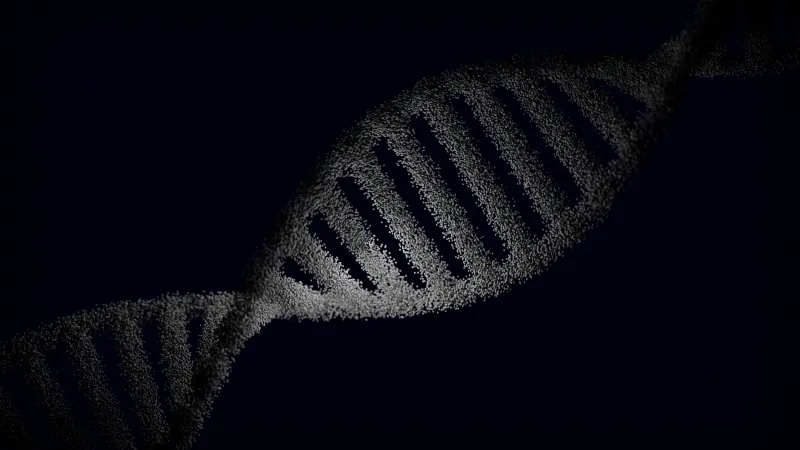
The answer begins not with information theory but with chemistry. Adenine — a purine base characterized by its double-ring structure — does not merely occupy a slot in the genetic alphabet. It performs a suite of chemical functions that are deeply entangled with the physical stability of the DNA double helix and the broader metabolic machinery of the cell.
Adenine pairs with thymine in DNA (and uracil in RNA) through two hydrogen bonds, a slightly weaker interaction than the three hydrogen bonds formed between guanine and cytosine. This asymmetry is not a flaw; it is a feature. The differential bonding strengths between AT and GC base pairs create a tunable landscape of helical stability. Regions of the genome rich in AT pairs are more easily unwound, facilitating transcription initiation and replication fork progression at biologically appropriate temperatures. A genome composed entirely of three bases — say, a system that eliminated adenine in favor of a purely GC-dominant pairing scheme — would lose this regulatory gradient. The molecular machinery that depends on localized strand separation would need to be substantially redesigned.
Beyond the double helix, adenine's importance extends into energy metabolism in ways that no alternative three-base scheme has satisfactorily addressed. Adenine is the structural core of adenosine triphosphate (ATP), the molecule that powers virtually every energy-requiring process in living cells. It is also embedded in NAD⁺, FAD, and coenzyme A — cofactors that sit at the center of cellular respiration and biosynthesis. These roles are not incidental to the genetic code; they are interwoven with it in ways that suggest adenine's selection was overdetermined by multiple simultaneous pressures.
The Contingency-Versus-Inevitability Debate
This is where the evolutionary puzzle deepens. One school of thought, associated broadly with the concept of molecular contingency, holds that the four-base system is essentially a historical accident — an early molecular configuration that, once established, became locked in by the overwhelming complexity of the biochemical networks built upon it. Under this view, life on another planet might plausibly have evolved a three-base or even five-base genetic system, each equally viable given different starting conditions.
The opposing perspective, sometimes called molecular inevitability, argues that the chemical properties of adenine and its three partners are so well-suited to the demands of information storage, structural stability, and metabolic integration that any sufficiently complex carbon-based life would likely converge on the same or a very similar solution. Proponents point to the fact that adenine has been detected in carbonaceous meteorites and can be synthesized abiotically under conditions thought to resemble early Earth — suggesting that its availability in the prebiotic environment may have been a prerequisite for, rather than a consequence of, its biological adoption.
Synthetic Biology's Contribution to the Question
One of the most illuminating ways to test these competing frameworks is to build alternative genetic systems in the laboratory and observe what breaks. Synthetic biology has made remarkable progress in this direction. Researchers have constructed so-called expanded genetic alphabets — systems incorporating unnatural base pairs beyond the canonical four — and demonstrated that cells can replicate and transcribe them with reasonable fidelity. These experiments confirm that biology is not rigidly confined to four bases in a mechanical sense.
Yet the synthetic systems that have achieved the greatest stability and functional integration have generally retained adenine and its natural partners as the backbone, adding unnatural bases as supplements rather than replacements. When investigators have attempted more radical substitutions — replacing adenine with structural analogs that alter hydrogen-bonding geometry — the downstream effects on RNA folding, ribosome function, and enzymatic activity tend to be severe. The message that emerges is nuanced: the genetic code is not so fragile that it cannot accommodate additions, but it is sufficiently optimized around adenine's specific properties that wholesale substitution carries enormous functional costs.
What This Means for Our Understanding of Life's Origins
For researchers working on the origins of life — a field that sits at the intersection of chemistry, geology, and evolutionary biology — the adenine question carries practical implications. If adenine's dominance reflects genuine chemical optimization rather than pure historical accident, then the search for life elsewhere in the universe gains a sharper focus. Biosignatures built around adenine-like purines, or around the metabolic cofactors that depend on them, become more meaningful targets for detection.
Conversely, if contingency played a larger role, the diversity of possible life chemistries expands dramatically, and the absence of adenine-based signatures elsewhere would tell us relatively little about whether life exists at all.
The Deeper Lesson
What the four-versus-three debate ultimately reveals is that the genetic code cannot be understood solely as a solution to an information storage problem. It is simultaneously a structural material, a metabolic participant, and an evolutionary inheritance shaped by pressures that operated long before the first cell divided. Adenine's place in that system is not arbitrary, but neither is it the only conceivable solution. It is, in the language of evolutionary biology, a highly fit solution to a remarkably complex and multidimensional problem — one that life, on this planet at least, appears to have solved only once.
That singular solution has persisted across four billion years, through every extinction event, every environmental upheaval, and every branching of the tree of life. Whether that persistence reflects inevitability, contingency, or some combination of both remains one of the most genuinely open questions in all of science — and one that adenine, quiet and ubiquitous, sits at the center of.